


Highlights
- There is a long delay in initiating clozapine during routine clinical practice.
- The delay may be an independent predictor of symptomatic outcome.
- Clinicians should reduce the delay in initiating clozapine to less than 3 years.
Abstract
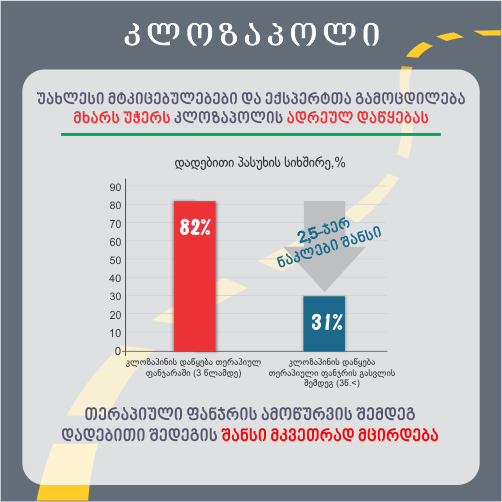
Previous studies have suggested that a delay in initiating clozapine is one of the predictors of outcomes in treatment-resistant schizophrenia (TRS). However, whether there is a critical treatment window of clozapine in TRS and the duration of that window remain unclear. We conducted a secondary analysis of a previously published observational study using a retrospective chart review of 105 patients with TRS who were treated with clozapine. We included 90 patients who remained on clozapine for at least 3 months. The delay in initiating clozapine was an independent contributor to symptomatic improvement based on treatment with clozapine by multiple linear regression analysis. A receiver operating characteristic curve analysis (area under the curve: 0.78) confirmed 2.8 years was the best predictive cut-off value of delay in initiating clozapine for responses in patients treated with clozapine (sensitivity: 0.66, specificity: 0.84). In patients with a delay in initiating clozapine of ≤2.8 years and a delay in initiating clozapine of >2.8 years, the response rates were 81.6% and 30.8% (risk ratio=2.65; 95% confidence interval, 1.80, 3.63), respectively. Clinicians should reduce the delay in initiating clozapine to less than 3 years to improve symptomatic outcomes in TRS and to prevent clozapine-resistant schizophrenia.
Introduction
About one in three patients with schizophrenia is treatment-resistant (Kennedy et al., 2014). Clozapine is the only antipsychotic confirmed to be effective in treatment-resistant schizophrenia (TRS) (Kane et al., 1988). However, clozapine is underused (Stahl, 2014, Warnez and Alessi-Severini, 2014), and there is a long delay in initiating clozapine (mean delay in initiating clozapine, 2–5 years) during routine clinical practice (Taylor et al., 2003, Harrison et al., 2010, Howes et al., 2012, Grover et al., 2015). In addition, 40–70% of patients with TRS do not respond sufficiently to clozapine even with adequate blood levels (Porcelli et al., 2012, Sommer et al., 2012). A previous retrospective chart-review study suggested that patients whose treatment with clozapine was delayed after a diagnosis of TRS gained less benefit from this treatment (Üçok et al., 2015). In a study by Üçok et al. in a university hospital academic setting where rating scales were not used for all patients, the delay in initiating clozapine was not defined as the duration of a clozapine-untreated TRS (Fig. 1), and the duration of the critical treatment window of clozapine in TRS was unclear. Our recent retrospective observational study suggested that a long delay in initiating clozapine, defined as the duration of a clozapine-untreated TRS (Fig. 1), was moderately correlated with poor symptomatic improvement in TRS by analysis with Spearman’s rank correlation coefficient (Yada et al., 2015). However, in our initial analysis, we did not consider potential confounding factors, and the duration of the critical treatment window of clozapine was unknown. This study investigated whether a delay in initiating clozapine is an independent contributor to symptomatic improvement, whether there is a critical treatment window of clozapine, and what its duration might be. We conducted an exploratory second analysis using a retrospective chart review of patients with TRS treated with clozapine in a community setting with routinely administered clinical ratings.
Section snippets
Patients
We collected data using a retrospective observational review of charts of 105 Japanese patients (continuous sampling) with a diagnosis of treatment-resistant schizophrenia, based on the International Classification of Diseases, Tenth Revision, and treated with clozapine at the inpatient ward of the Okayama Psychiatric Medical Center. Our hospital is a tertiary psychiatric care center in a Japanese city with a population of about 700,000. Patients who were started on clozapine between 1 January
Results
The clinical characteristics and outcomes of 105 patients treated with clozapine are shown in Table 1. A total of 90 patients met the selection criteria after the exclusion of 15 patients who discontinued treatment with clozapine within the first 3 months because of side effects (n=11), patient refusal (n=3), and lost to follow-up (n=1). There were no differences between the clinical characteristics of the 90 included patients and 15 excluded patients except age.
Table 2 shows the mutually
Discussion
Our findings suggest that a delay in initiating clozapine is a predictor of outcomes in TRS, similar to the duration of untreated psychosis (DUP) in first-episode schizophrenia (FES) (Marshall et al., 2005, Perkins et al., 2005, Penttilä et al., 2014), and the duration of the critical treatment window of clozapine was approximately 3 years, similar to the critical period (2–5 years) in FES (Birchwood et al., 1998, Garety and Jolley, 2000, McGorry, 2002). A delay in initiating clozapine was an
Conclusion
Clinicians should strive to reduce the delay in initiating clozapine to less than 3 years to improve symptomatic outcomes in TRS and to prevent clozapine-resistant schizophrenia. Treatment options available for patients with clozapine-resistant schizophrenia are limited (Muscatello et al., 2014, Miyamoto et al., 2015, Petrides et al., 2015). We hope to perform a future prospective multicenter study with a larger sample and an adequate clozapine trial with therapeutic drug monitoring to
Conflict of interest
Prof. Norihito Yamada has received unrestricted research funding from Daiichi Sankyo, Eisai, Pfizer, Otsuka, Astellas, and MSD that was deposited into research accounts at Okayama University. Prof. Norihito Yamada has received honoraria from Hisamitsu, Otsuka, MSD, Eli Lilly Japan, Meiji Seika, Janssen, and Kyowa Hakko Kirin for his participation as a speaker at educational events. Dr. Bunta Yoshimura has received honoraria from Otsuka and Janssen for his participation as a speaker at
Contributors
Bunta Yoshimura and Yuji Yada designed the study. Ryuhei So, Manabu Takaki and Norihito Yamada supervised the study. Bunta Yoshimura, Yuji Yada and Ryuhei So analyzed the data. Bunta Yoshimura drafted the report. All authors approved the final manuscript.
Acknowledgments
The authors thank each attending physician at the Okayama Psychiatric Medical Center for the collection of data.
References (40)
- S. Grover et al. Delay in initiation of clozapine: a retrospective study from a tertiary care hospital in North India. Psychiatry Res. (2015)
- E. Paz et al. Evaluation of three dosing models for the prediction of steady-state trough clozapine concentrations. Clin. Biochem. (2008)
- S. Porcelli et al. Clozapine resistance: augmentation strategies. Eur. Neuropsychopharmacol. (2012)
- Y. Yada et al. Correlation between delay in initiating clozapine and symptomatic improvement. Schizophr. Res. (2015)
- O. Agid et al. An algorithm-based approach to first-episode schizophrenia: response rates over 3 prospective antipsychotic trials with a retrospective data analysis. J. Clin. Psychiatry. (2011)
- M. Birchwood et al. Early intervention in psychosis: the critical period hypothesis. Br. J. Psychiatry (1998)
- M. Birchwood et al. Reducing duration of untreated psychosis: care pathways to early intervention in psychosis services. Br. J. Psychiatry (2013)
- J.G. Csernansky et al. A comparison of risperidone and haloperidol for the prevention of relapse in patients with schizophrenia. N. Engl. J. Med. (2002)
- J. Endicott et al. The global assessment scale. A procedure for measuring overall severity of psychiatric disturbance. Arch. Gen. Psychiatry (1976)
- P. Garety et al. Early intervention in psychosis. Psych. Bull. (2000)